Op-Amp vs Differential vs Instrumentation Amplifier Explained
2026-05-04
60
Catalog
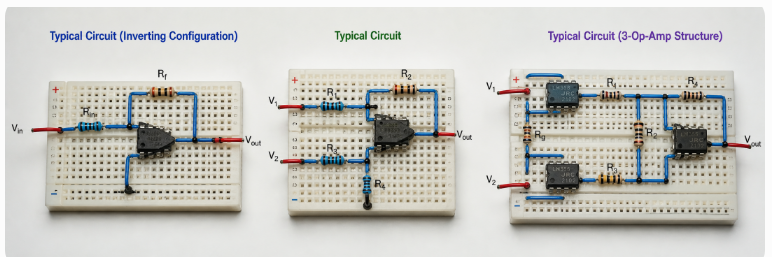
Types of Amplifiers
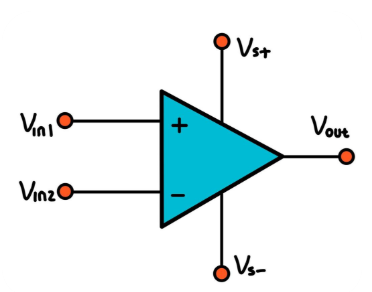
Figure 2. Op-Amp with Two Inputs and One Output
1. Operational Amplifier (Op-Amp)
An operational amplifier (op-amp) is a versatile, general-purpose amplifier used in a wide range of analog applications.
Vout = A(V⁺ − V⁻)
It amplifies the difference between two input signals and is commonly used for signal amplification, filtering, buffering, and comparator circuits.
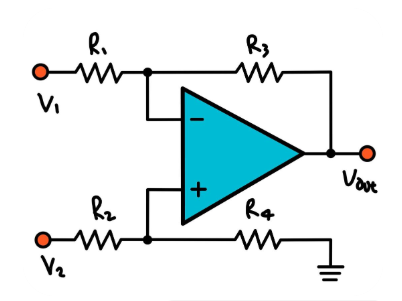
Figure 3. Differential Amplifier Circuit with Resistor Network
2. Differential Amplifier
A differential amplifier amplifies the difference between two input signals while rejecting noise common to both inputs.
Vout = Ad(V₂ − V₁)
It is commonly used in current sensing, ADC input stages, and industrial signal processing applications.
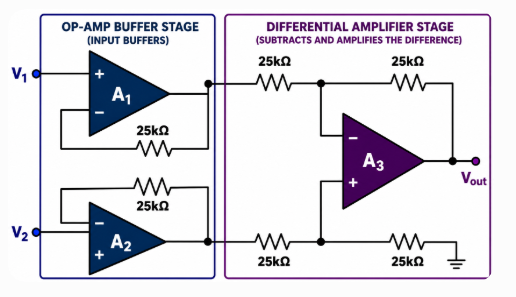
Figure 4. Instrumentation Amplifier with Input Buffers and Differential Stage
3. Instrumentation Amplifier
An instrumentation amplifier is designed for precise measurement of very small signals in noisy environments.
G = 1 + (2R / Rg)
It provides very high input impedance, high accuracy, and excellent noise rejection. It is commonly used in sensor interfaces, medical devices such as ECG systems, and industrial measurement systems.
How Each Amplifier Operates
An op-amp uses internal amplification stages with external feedback to control its output.
A differential amplifier’s accuracy depends on resistor matching.
An instrumentation amplifier uses buffer stages followed by a differential stage to provide stable and accurate output.
Practical Design Considerations
Op-Amp: It uses external resistors and capacitors to set its behavior, but its performance is sensitive to circuit layout.
Differential Amplifier: It requires closely matched resistors for proper operation, since any mismatch can reduce accuracy.
Instrumentation Amplifier: Its gain is set by a single resistor, and its internally matched components make it more stable.
Input and Output Characteristics
|
Parameter |
Op-Amp |
Differential
Amplifier |
Instrumentation
Amplifier |
|
Input Impedance |
Medium to high |
Medium |
Very high |
|
Output Behavior |
Configurable output |
Outputs signal difference |
Stable and precise output |
Gain and Performance
Op-Amp- Gain is set by external components and may vary with resistor tolerance and temperature.
Differential Amplifier- Gain depends on resistor ratios, offering improved accuracy over basic op-amp configurations.
Instrumentation Amplifier- Gain is set using a single resistor and is stable.
Noise Rejection and CMRR
CMRR=Ad/Ac
CMRR (Common-Mode Rejection Ratio) indicates how effectively an amplifier rejects noise that is common to both input signals.
Higher CMRR means better ability to eliminate unwanted noise and improve signal accuracy.
|
Amplifier |
Noise
Rejection |
Typical
CMRR |
|
Op-Amp |
Basic |
Moderate |
|
Differential |
Good |
60–100 dB |
|
Instrumentation |
Excellent |
100–140 dB |
Practical Examples
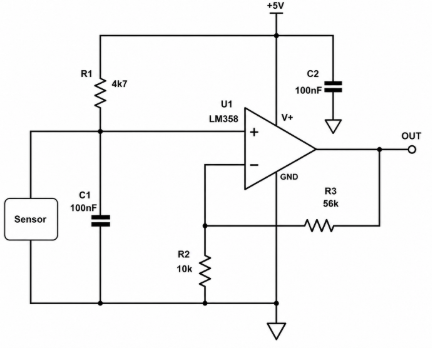
Figure 5. LM358 Op-Amp Amplifying Sensor Signal for ADC Input
Op-Amp: LM358
It is used to amplify small sensor signals, such as those from temperature sensors, allowing the signal level to better match the input range of an ADC. By scaling the signal appropriately, it improves measurement resolution while keeping the overall system cost low.
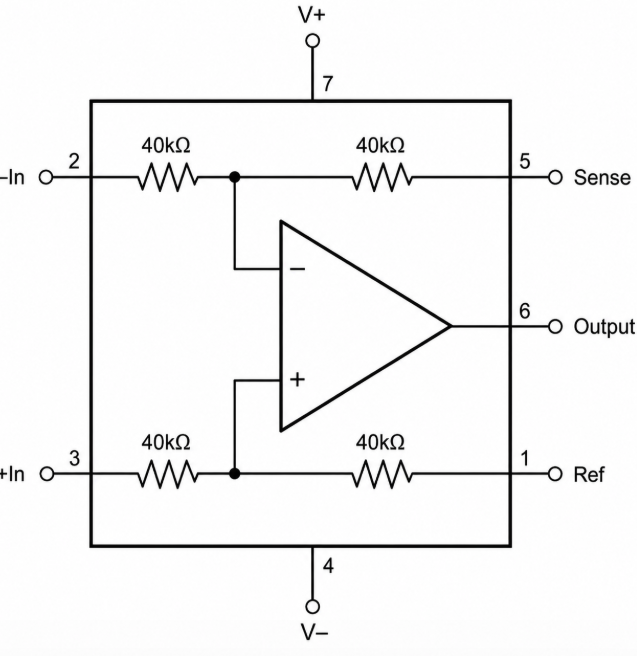
Figure 6. INA132 Differential Amplifier for Accurate Current Sensing
Differential Amplifier: INA132
It measures the voltage across a shunt resistor and is commonly used in current sensing applications. By focusing on the voltage difference, it helps reduce the effect of electrical noise, resulting in more accurate measurements.
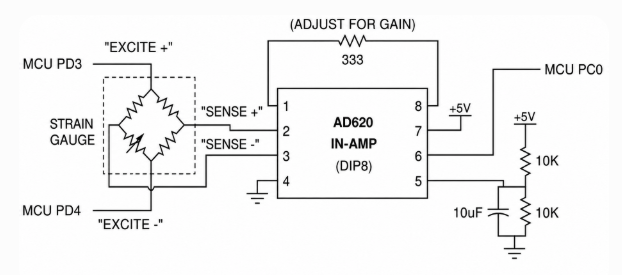
Figure 7. AD620 Amplifies Strain Gauge Signals for Precise Measurement
Instrumentation Amplifier: AD620
It amplifies low-level signals, such as those from strain gauges, before they are sent to an ADC for conversion. This ensures that even tiny signal changes are captured accurately, resulting in stable and precise readings.
|
Device |
Role |
Strength |
Trade-off |
|
LM358 |
General amplification |
Low cost |
Lower precision |
|
INA132 |
Signal comparison |
Noise reduction |
Fixed gain |
|
AD620 |
Precision measurement |
High accuracy |
Higher cost |
Amplifier Selection and Comparison
Choosing the right amplifier depends on signal level, noise conditions, and accuracy requirements. Each amplifier type is suited for specific applications based on its performance characteristics.
Op-Amp: Best for simple applications with clean, medium to strong signals where low cost and flexibility are important.
Differential Amplifier: Suitable for comparing two signals in environments with moderate noise.
Instrumentation Amplifier: Ideal for low-level signals that require high accuracy and strong noise rejection.
|
Feature |
Op-Amp |
Differential
Amplifier |
Instrumentation
Amplifier |
|
Signal Level |
Medium to strong |
Moderate |
Low-level |
|
Noise Rejection |
Basic |
Good |
Excellent |
|
Precision |
Moderate |
Moderate |
High |
|
Design Complexity |
Sensitive to layout |
Requires matched resistors |
Stable with internal matching |
|
Cost |
Low |
Medium |
High |
Common Design Mistakes
Op-Amps
• Using wrong supply voltage - limited output range
• Ignoring input bias current - measurement errors
• Using low-speed op-amps for fast signals - distortion
Differential Amplifiers
• No input protection - damage from voltage spikes
• Poor grounding - unstable output
• Placing too far from source - increased noise
Instrumentation Amplifiers
• Poor power supply - reduced accuracy
• Ignoring offset voltage - shifted readings
• Skipping calibration - long-term errors
• Overusing them when not needed - leads to increased cost
Conclusion
Op-amps, differential amplifiers, and instrumentation amplifiers each serve different purposes in signal processing. Choosing the right one depends on the required accuracy, noise handling, and cost. Understanding their differences helps in designing more reliable and efficient systems.
 ACERCA DE NOSOTROS
Satisfacción del cliente cada vez.Confianza mutua e intereses comunes.
ACERCA DE NOSOTROS
Satisfacción del cliente cada vez.Confianza mutua e intereses comunes.
prueba de funcionamiento.Los productos más rentables y el mejor servicio es nuestro compromiso eterno.
Artículo caliente
- LM358 Guía completa del amplificador operacional Dual: Pinuts, diagramas de circuito, equivalentes, ejemplos útiles
- ¿Son intercambiables CR2032 y CR2016?
- Comprensión de las diferencias Análisis técnico y de rendimiento ESP32 y ESP32-S3
- Elegir la batería correcta: una guía para los equivalentes AG4, LR626, LR66, 177/376/377, SR626 y SR626SW
- Conceptos básicos del transistor BC547: distribución de pines, circuitos de aplicación, modelos alternativos/complementarios
- NPN vs. PNP: ¿Cuál es la diferencia?
- ESP32 vs STM32: ¿Qué microcontrolador es mejor para usted?
- ¿Qué es un MOSFET y cómo funciona?
- Relé eléctrico Básico: Operación de trabajo, tipos y usos
- Transistores PNP: estructura, principio de trabajo y aplicación
 Bridge Rectifier: Definition, Circuit, and Applications
2026-05-04
 Disyuntores en tándem para paneles eléctricos completos
2026-05-03
Preguntas frecuentes [FAQ]
1. Why is noise rejection more important in differential and instrumentation amplifiers than in op-amps?
Differential and instrumentation amplifiers are often used with weak signals that can easily be affected by noise. Strong noise rejection ensures accurate measurement, especially in industrial and sensor-based systems.
2. What makes instrumentation amplifiers more accurate than basic op-amp circuits?
Instrumentation amplifiers use internal matching and buffer stages, which improve stability and reduce errors. This design allows them to handle low-level signals with higher precision compared to standard op-amp setups.
3. Why do instrumentation amplifiers have higher cost compared to other amplifiers?
They include internally matched components and additional stages that improve accuracy and stability. These design features increase performance but also raise the overall cost.
4. How do gain control methods differ between these three amplifiers?
Op-amps use external components, differential amplifiers rely on resistor ratios, and instrumentation amplifiers use a single resistor. This makes instrumentation amplifiers easier to configure for precise gain settings.
5. What common mistakes reduce amplifier performance in practical designs?
Common issues include wrong supply voltage, poor grounding, resistor mismatch, and lack of calibration. These mistakes can lead to inaccurate results or unstable operation.
6. How do practical examples like LM358, INA132, and AD620 show the differences between amplifier types?
LM358 is used for general amplification at low cost, INA132 is used for noise-resistant signal comparison, and AD620 is used for precise measurement of small signals. These examples highlight how each amplifier fits different applications.
Número de pieza caliente
 C2012C0G2E392J125AA
- C2012JB1C475K060AC
 C1608X8R1H223K080AE
- C1608CH2E151K080AA
 CC0402FRNPO9BN330
 CC0603KRX7R0BB101
 1808PC103MAT2A
 LD051A301JAB2A
 LMK325BJ476MMHP
 GRM1556R1HR50BD01D
- 2N7002A-7
- MPC8280CVVUPEA
- SST39VF400A-70-4C-M1QE
- VI-J0R-CY
- ATSAMD20J18A-AUT
- ISL3172EIBZ
- ACPL-K342-000E
- VI-22N-CY
- IR2110L4
- P589A4107
- STM32L496RET6
- AD7910AKSZ-REEL7
- REF5020AIDGKT
- LP2988IMMX-5.0/NOPB
- AD8651ARZ
- T491C337M006AT
- NCV7708ADWR2G
- TSV6392IST
- T491X157M010AH
- 74ALVT16245DGG
- ICS1491F-10LF
- K7B163635B-QC75
- MAX291EPA
- MC100LVEP14DTR
- PF38F4050M0Y0C0
- TMX320D710E001ZDH
- TMV0505D
- NCV7518
- ST8AF6226
- MAX5872EXE
- H5PS5162FFR20L
- YMF740C-V
- IS46TR16128DL-107MBLA2
- SGM6013-ADJYTN5G/TR
- 112J-TDAR-R01
- AM3352BZCZD60 IC
- VI-J00-CY/F1
- NAHDMI-W-B
- LM35DZIC